Math in Focus Grade 1 Chapter 19 Answer Key Money

Go through the Math in Focus Grade 1 Workbook Answer Key Chapter 19 Money to finish your assignments.

Math in Focus Grade 1 Chapter 19 Answer Key Money

Math Journal

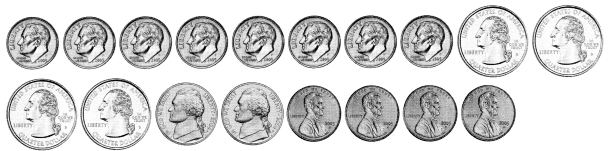
Susan and Marta place all their money on a table.
Math in Focus Grade 1 Chapter 19 Answer Key Money 1
Write sentences about the money you see. Say what you can buy with it.

Example
There are eight dimes. There are __________ coins in all. I can exchange 2 nickels with _________. I can buy _________ with 50¢.

Question 1.
how many quarters are there, and the sum of the quarter coins is ?
Answer:
There are 4 quarter coins, and the sum of the quarter coins is $1.
Explanation:
1 quarter = 25¢
4 quarters = 25¢ + 25¢ + 25¢ + 25¢ = $1

Question 2.
find the sum of nickels and pennies place on the table
Answer: 14¢
Explanation:
2 nickels and 4 pennies are there on the table
1 nickel = 5¢
1 penny = 1¢
5¢ +5¢ + 1¢ + 1¢ + 1¢ + 1¢ = 14¢

Question 3.
How many coins placed on the table?
Answer:
18 coins
Explanation:
8 dimes, 4 quarters, 2 nickels and 4 pennies are there on the table.
Total coins = 8 + 4 + 2 + 4 18

Question 4.
what is the total value of the money placed on the table in ¢
Answer: 194¢
Explanation:
8 dimes, 4 quarters, 2 nickels and 4 pennies are there on the table.
1 dime = 10¢
1  quarter = 25¢
1 nickel = 5¢
1 penny = 1¢
Total money placed on table
= 8 x 10 + 4 x 25 + 2 x 5 + 4 x 1
= 80 + 100 + 10 +4
= 194¢

Put On Your Thinking Cap!

Challenging Practice

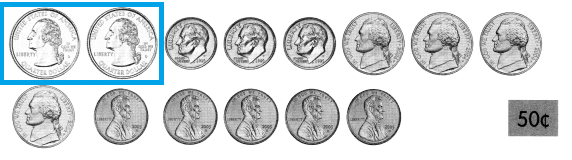
Circle the coins to show the amount. Use the least number of coins.

Question 1.
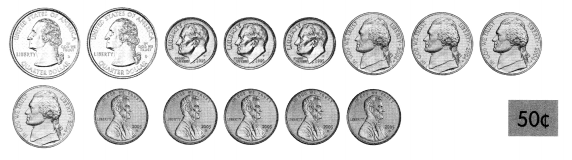
Math in Focus Grade 1 Chapter 19 Answer Key Money 2
Answer:

Explanation:
2 quarters = 50¢
1 quarter = 25¢
25¢ + 25¢ = 50¢

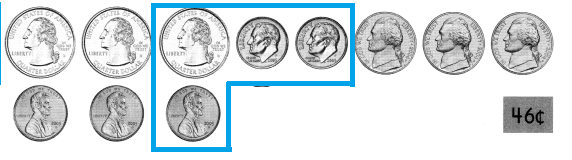
Question 2.
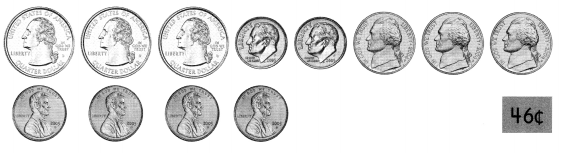
Math in Focus Grade 1 Chapter 19 Answer Key Money 3
Answer:

Explanation:
1 quarter + 2 dimes + 1 penny
1 quarter = 25¢
1 dime = 10¢
1 penny = 1¢
25¢ + 10¢ + 10¢ + 1¢ = 46¢

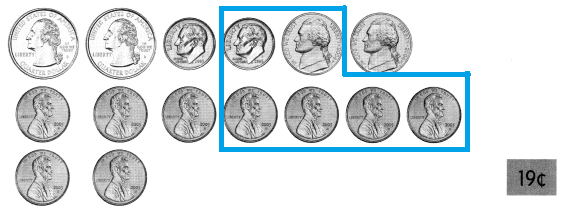
Question 3.
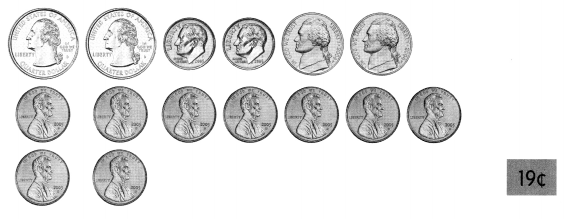
Math in Focus Grade 1 Chapter 19 Answer Key Money 4
Answer:

Explanation:
1 dime + 1 nickel + 4 pennies
1 dime = 10¢
1 nickel = 5¢
1 penny = 4¢
10¢ + 5¢ + 4¢ = 19¢

Solve.

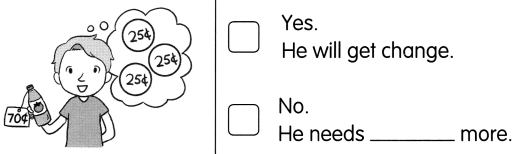
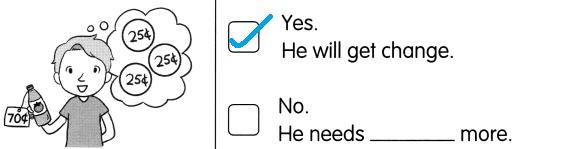
Does Jordan have enough money?
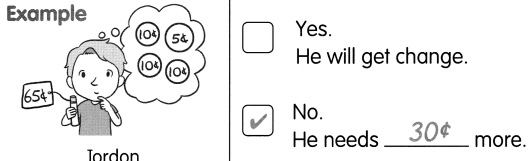
Math in Focus Grade 1 Chapter 19 Answer Key Money 5

Question 4.
Math in Focus Grade 1 Chapter 19 Answer Key Money 6
Answer: 5¢
75¢ – 70¢ = 5¢

Explanation:
Tordon has 3 quarters.
1 quarter = 25¢
25¢ + 25¢ + 25¢ = 75¢
Cost of soft drink = 70¢
75¢ – 70¢ = 5¢

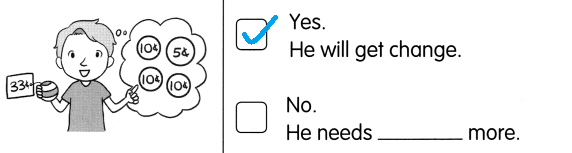
Question 5.
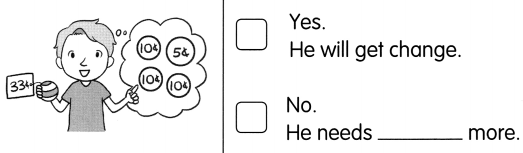
Math in Focus Grade 1 Chapter 19 Answer Key Money 7
Answer: 2¢
35¢ – 33¢ = 2¢

Explanation:
Tardon has 3 dimes and 1 nickel
1 dime = 10¢
1 nickel = 5¢
Total amount he has = 30¢ + 5¢ = 35¢
Cost of ball = 33¢
Total change he get back
= 35¢ – 33¢ =2¢

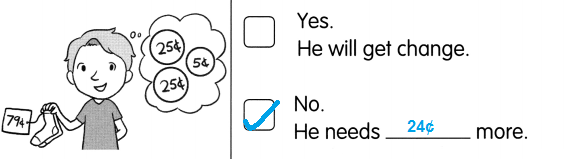
Question 6.
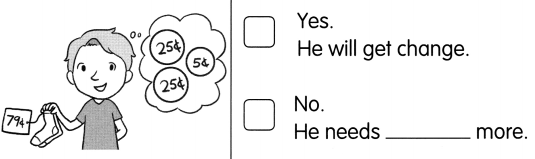
Math in Focus Grade 1 Chapter 19 Answer Key Money 8
Answer: 24¢
79¢ – 55¢ = 24¢

Explanation:
2 quarters and 1 nickel
1 quarter = 25¢ and 1 nickel = 5¢
Total amount he has = 25¢ + 25¢ + 5¢ = 55¢
Cost of a pair of socks = 79¢
Total change he needs = 79¢ – 55¢ = 24¢

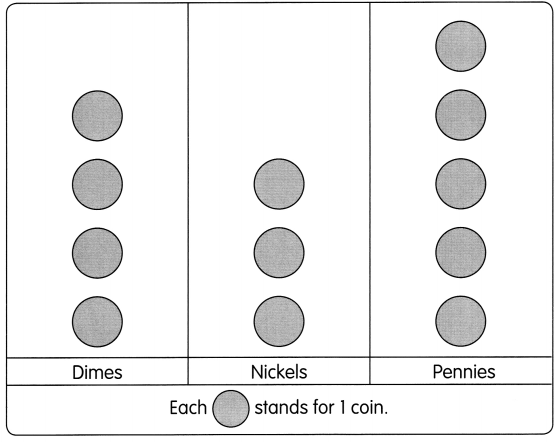
The picture graph shows the coins Britney has in her piggy bank.

Coins in Britney’s Piggy Bank
Math in Focus Grade 1 Chapter 19 Answer Key Money 9
Find the value of the coins in Britney’s piggy bank.
Answer: 60¢
Explanation:
1 dime = 10¢
4 dimes x 10¢ = 40¢
1 nickel = 5¢
3 nickels x 5¢ = 15¢
1 penny = 1¢
5 pennies x 1¢ = 5¢
Total coins = 40¢ +15¢ +5¢ = 60¢

Put On Your Thinking Cap!

Problem Solving

Question 1.
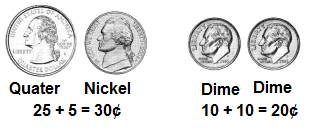
Kenny wants to buy these juices.
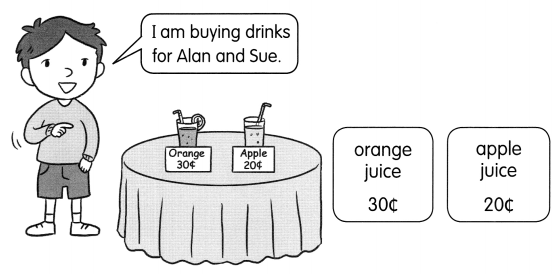
Math in Focus Grade 1 Chapter 19 Answer Key Money 10
He uses four coins. Draw the coins Kenny uses.
Answer:
Explanation:
He uses 1 quarter and 1 nickel for orange juice
25¢+5¢ for orange juice and
He uses 2 dimes for apple juice
10¢ +10¢ for apple juice
Total 4 coins he used are one quarter and one nickel and two dimes.

Solve. Show your work.

Question 2.
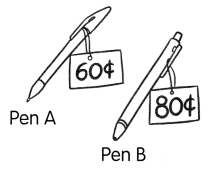
Brenda has less than 95¢. After buying a pen, she has 15¢ left. Which pen does she buy?
Math in Focus Grade 1 Chapter 19 Answer Key Money 11
She buys __________.
Answer:
Pen A
Explanation:
Brenda has less than 95¢.
After buying a pen, she has 15¢ left.
Cost of pen A = 60¢
60¢ + 15¢ = 75¢
75¢ is less then 95¢

Question 3.
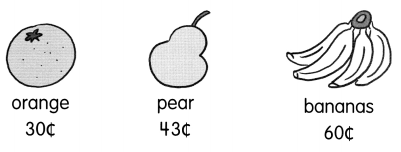
Keith has more than 70¢ but less than 90¢. He buys one of the food items. He has 12¢ left. Which food does he buy?
Math in Focus Grade 1 Chapter 19 Answer Key Money 12
He buys the _____________.
Answer:
He buys Orange and Pear
Explanation:
Keith has more then 70¢ and less the 90¢
Cost of orange 30¢
Cost of pear 43¢
Cost of bananas 12¢
Total food he bought
30¢ + 43¢ + 12¢ = 85¢
85¢ is more then 70¢ and less the 90¢

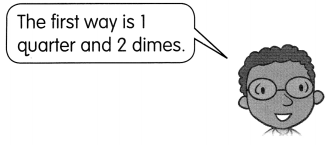
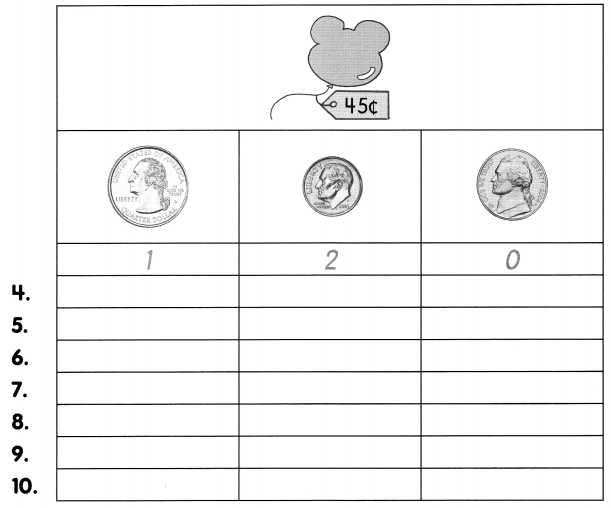
Rex wants to buy a balloon for 45¢ He has quarters, dimes, and nickels. He can make 45¢ in 8 ways.

Write the correct number of coins.
Math in Focus Grade 1 Chapter 19 Answer Key Money 13
Answer:

Math in Focus Grade 1 Chapter 19 Answer Key Money 14

Chapter Review/Test

Vocabulary

Choose the correct word.

quarter
less
penny
dime
nickels

Question 1.
A ___________ has a value of 10¢.
Answer:
Dime
Explanation:
A dime has a value of 10¢.

Question 2.
A ___________ has a value of 25¢.
Answer:
Quarter
Explanation:
A quarter has a value of 25¢.
It means one fourth of Dollar.

Question 3.
A dime is ___________ than a quarter.
Answer: less
Explanation:
1 dime = 10¢
1 quarter = 25¢
So, dime is less than a quarter.

Question 4.
A nickel is greater than a ___________.
Answer:
A nickel is greater than a penny.
Explanation:
1 nickel = 5¢
1 penny = 1¢
So, nickel is greater than penny.

Question 5.
2 ___________ have a value of 10¢.
Answer:
Nickels
Explanation:
1 nickel = 5¢
2 nickels have a value of 10¢.

Concepts and Skills

Identify each coin.

Question 6.
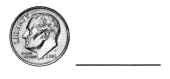
Math in Focus Grade 1 Chapter 19 Answer Key Money 15
Answer:
Dime
Explanation:
The above coin represents dime.
1 dime = 10¢

Question 7.
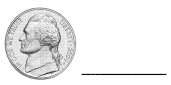
Math in Focus Grade 1 Chapter 19 Answer Key Money 16
Answer:
Nickel
Explanation:
The above coin represents Nickel.
1 nickel = 5¢

Question 8.
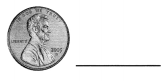
Math in Focus Grade 1 Chapter 19 Answer Key Money 17
Answer:
Penny
Explanation:
The above coin represents Penny.
1 penny = 1¢

Question 9.
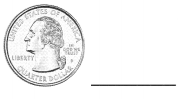
Math in Focus Grade 1 Chapter 19 Answer Key Money 18
Answer:
Quarter
Explanation:
The above coin represents quarter.
1 quarter = 25¢
4 quarters = $1

Fill in the blanks.

Question 10.
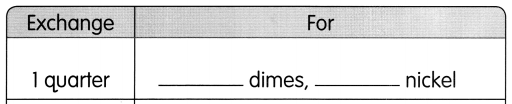
Math in Focus Grade 1 Chapter 19 Answer Key Money 19
Answer:
2 dimes + 1 nickel = 1 quarter
Explanation:
1 dime = 10¢
1 nickel = 5¢
10¢ + 10¢ + 5¢ = 25¢

Question 11.
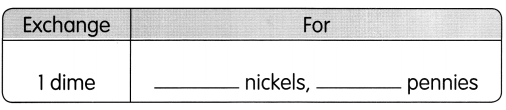
Math in Focus Grade 1 Chapter 19 Answer Key Money 20
Answer:
1 nickel + 5 pennies = 1 dime
Explanation:
1 dime = 10¢
1 nickel + 5 pennies = 1 dime
1 nickel = 5¢
1 penny = 1¢
5¢ + 5¢ = 10¢

Count the money.

Question 12.
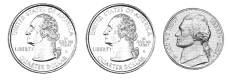
Math in Focus Grade 1 Chapter 19 Answer Key Money 21
is ___________ ¢.
Answer: 55¢
Explanation:
2 quarters + 1 nickel
1 quarter = 25¢
1 nickel = 5¢
25¢ + 25¢ + 5¢ = 55¢

Question 13.
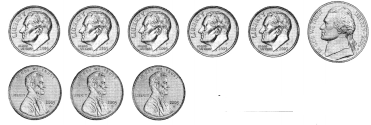
Math in Focus Grade 1 Chapter 19 Answer Key Money 22
is _____________ ¢.
Answer: 58¢
Explanation:
5 dimes + 1 nickel + 3 pennies
1 dime = 10¢
1 nickel = 5¢
1 penny = 1 5¢
5 x 10 + 5 + 3 x 1 = 58¢

Add or subtract.

Question 14.
80¢ + 15¢ = ____________
Answer: 95¢
Explanation:
In addition if we change the order of numbers, the sum does not change.
The sum is always greater then the addends.
80¢ + 15¢ = 95¢

Question 15.
38¢ – 19¢ = ____________
Answer: 19¢
Explanation:
Subtract the small amount from the big amount to get the difference.
38¢ – 19¢ = 19¢

Problem Solving

Solve.

Question 16.
Zack has 64¢. He buys a pencil for 25¢. How much does he have left?
He has __________ left.
Answer: 39¢
Explanation:
Zack has 64¢.
He buys a pencil for 25¢.
Total change left with him
64¢ – 25¢ = 39¢

Question 17.
Wendy buys a notebook for 52¢, a bun for 19¢, and a drink for 23¢. How much does she spend?
She spends ____________.
Answer: 94¢
Explanation:
Wendy buys a notebook for 52¢,
a bun for 19¢, and a drink for 23¢.
Total amount she spend
52¢ + 19¢ + 23¢ = 94¢
Math in Focus Grade 2 Chapter 9 Practice 1 Answer Key Getting to Know Volume

Practice the problems of Math in Focus Grade 2 Workbook Answer Key Chapter 9 Practice 1 Getting to Know Volume to score better marks in the exam.

Math in Focus Grade 2 Chapter 9 Practice 1 Answer Key Getting to Know Volume

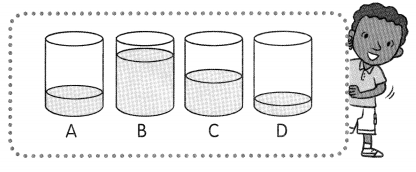
Fill in the blanks with more, less, or same.

Question 1.
Math in Focus Grade 2 Chapter 9 Practice 1 Answer Key Getting to Know Volume 1
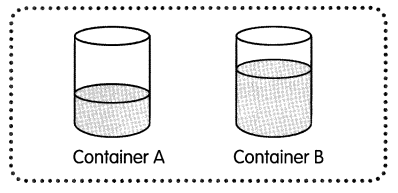
Container A and Container B are the same size.

a. Container B has ___ water than Container A.
Answer: more
Explanation:
Observe the picture carefully,
container A is having less water.
container B is having more water.
Therefore, the volume of water in container B is more than in container A.

b. Container A has __ water than Container B.
Answer: less
Observe the picture carefully,
container A is having less water.
container B is having more water.
Therefore, the volume of water in container A is less than in container B.

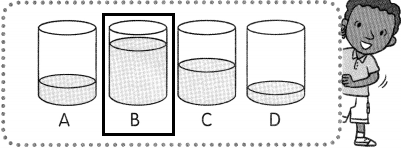
Question 2.
Math in Focus Grade 2 Chapter 9 Practice 1 Answer Key Getting to Know Volume 2
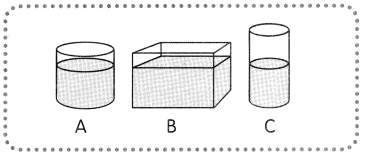
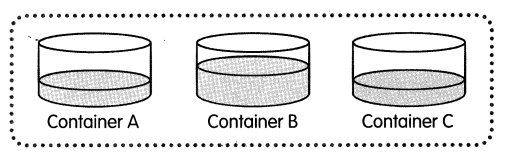
Container A, Container B, and Container C are the same size.
a. Container A has ___ water than Container B.
Answer: less
Explanation:
Observe the pictures carefully,
Container A is having less water.
Container B is having more water.
Therefore, the volume of water in container A is less than in container B.

b. Container B has ___ water than Container A.
Answer: more
Explanation:
Observe the pictures carefully,
Container A is having less water.
Container B is having more water.
Therefore, the volume of water in container B is more than in container A.

c. Container A has the ___ amount of water as Container C.
Answer: same.
Observe the pictures carefully,
Container A is having the same water.
Container c is having the same water.
Therefore, the volume of water in container A is as same as in container C. Both levels are equal.

Fill in the blanks.

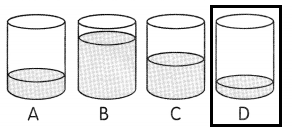
Question 3.
Math in Focus Grade 2 Chapter 9 Practice 1 Answer Key Getting to Know Volume 3
The containers are the same size.

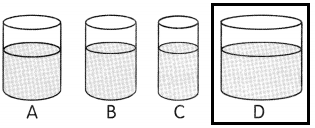
a. Container _____ has the greatest amount of water.
Answer: B
Math in Focus Grade 2 Chapter 9 Practice 1 Answer Key Getting to Know Volume q3
The volume of water levels is high in container B.

b. Container ___ has the least amount of water.
Answer: D
The volume of water levels is less in container D.
Math in Focus Grade 2 Chapter 9 Practice 1 Answer Key Getting to Know Volume q3.2

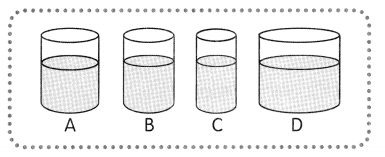
Question 4.
Math in Focus Grade 2 Chapter 9 Practice 1 Answer Key Getting to Know Volume 4
a. Container ___ has the greatest amount of water.
Answer: D
Math in Focus Grade 2 Chapter 9 Practice 1 Answer Key Getting to Know Volume q4
Explanation:
We need to determine according to its shape. If the size is more then it can hold a high amount of water.

b. Container ___ has the least amount of water.
Answer: Container C
In this, the shape is thin compared to other shapes. so it can hold less amount of water.

Question 5.
Math in Focus Grade 2 Chapter 9 Practice 1 Answer Key Getting to Know Volume 5

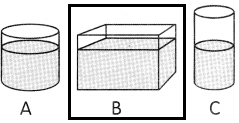
a. Container ________ has the greatest amount of water.
Answer: Container B
Explanation:
We need to determine the size of the container. The cube can hold a high amount of water.
Math in Focus Grade 2 Chapter 9 Practice 1 Answer Key Getting to Know Volume q5.11

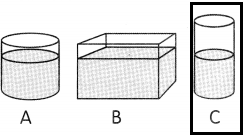
b. Container ________ has the least amount of water.
Answer: Container C
Math in Focus Grade 2 Chapter 9 Practice 1 Answer Key Getting to Know Volume q5
Explanation:
We need to determine the size of the container. It is in a cylinder shape and it is thin when compared to container A. So container C can hold less amount of water.

Math in Focus Grade 2 Chapter 9 Practice 2 Answer Key Getting to Know Volume

Practice the problems of Math in Focus Grade 2 Workbook Answer Key Chapter 9 Practice 2 Getting to Know Volume to score better marks in the exam.

Math in Focus Grade 2 Chapter 9 Practice 2 Answer Key Getting to Know Volume

Fill in the blanks.

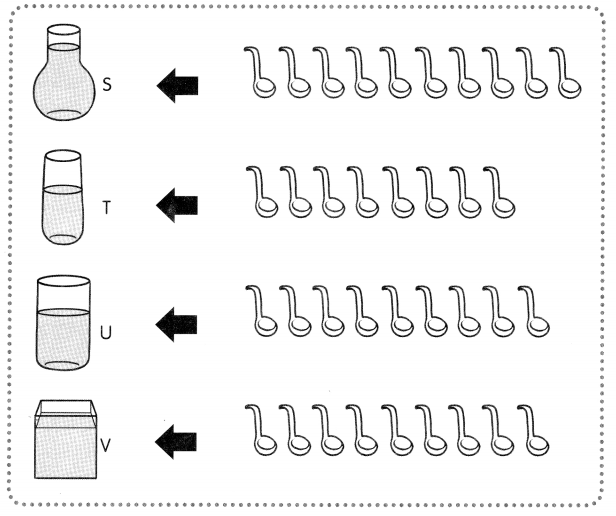
Water is scooped out of a pail and poured into these containers. Each Math in Focus Grade 2 Chapter 9 Practice 2 Answer Key Getting to Know Volume 1 is one scoop.

Math in Focus Grade 2 Chapter 9 Practice 2 Answer Key Getting to Know Volume 2

Question 1.
Container ___ has the greatest amount of water.
Answer: Container S
Explanation:
Observe the picture carefully, there are 10 scoops in container S.
Now count all the scoops of containers. Compare to container S then you will get the answer.
container S has 10 scoops.
container T has 8 scoops.
container U has 9 scoops.
container V has 9 scoops.
Now compare each other, 10 is greater than 8 and 9.
So, container S is greater.

Question 2.
Container __ has the least amount of water.
Answer: container T
Explanation:
Observe the picture carefully, there are 8 scoops in container T.
Now count all the scoops of containers. Compare to a container T then you will get the answer.
container S has 10 scoops.
container T has 8 scoops.
container U has 9 scoops.
container V has 9 scoops.
Now compare each other, 8 is lesser than 10 and 9.
So, container T is lesser.

Question 3.
Containers ___ and ___ have the same amount of water.
Answer: container U and container V
Explanation:
Observe the picture carefully, there are 8 scoops in container T.
Now count all the scoops of containers. Compare to a container T then you will get the answer.
container S has 10 scoops.
container T has 8 scoops.
container U has 9 scoops.
container V has 9 scoops.
Now compare each other, container U and container V have the same scoops.

Question 4.
Container ___ has more water than Container U.
Answer: container S
Explanation:
Container S has 10 scoops.
Container U has 9 scoops.
Now compare both the scoops. 10 > 9.
So container S has more water than container U.

Question 5.
Container V has more water than Container ____.
Answer: container T
Explanation:
Now count the number of scoops present in container V and container T.
container V has 9 scoops.
container T has 8 scoops.
Therefore, 9 > 8.
So, container V has more than container T.

Fill in the blanks.

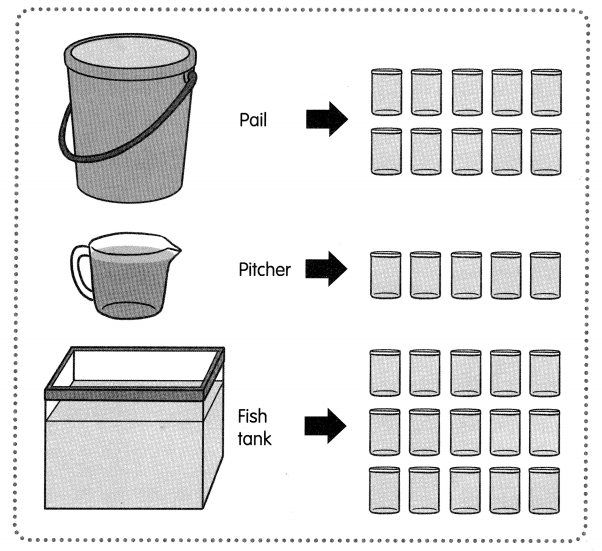
All the water in each container is used to fill the glasses.

Math in Focus Grade 2 Chapter 9 Practice 2 Answer Key Getting to Know Volume 3

Fill in the blanks.

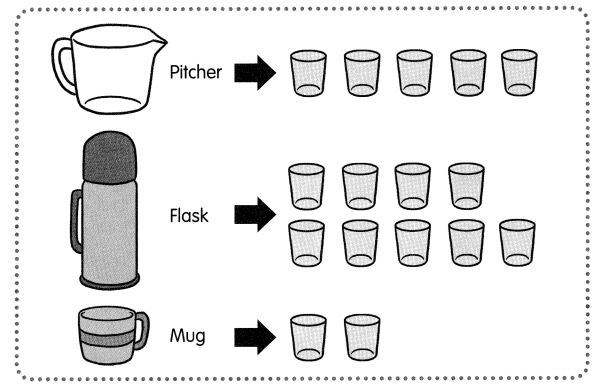
Luisa fills glasses of the same size with all the water from the pitcher, flask, and mug.

Math in Focus Grade 2 Chapter 9 Practice 2 Answer Key Getting to Know Volume 4

Question 9.
The ____ has the most water.
Answer:  flask
Explanation:
The flask is having 9 glasses of milk.
The mug is having 2 glasses of milk.
The pitcher is having 5 glasses of milk.
Now compare all the glasses and write which one is highest.
The highest number of glasses are 9 that is a flask.

Question 10.
The ____ has the least water.
Answer: mug.
Explanation:
The flask is having 9 glasses of milk.
The mug is having 2 glasses of milk.
The pitcher is having 5 glasses of milk.
Now compare all the glasses and write which one is least.
The least number of glasses are 2 that is a mug.

Question 11.
There are ___ more glasses of water in the flask than in the pitcher.
Answer: 4 glasses
Explanation:
The flask is having 9 glasses of milk.
The pitcher is having 5 glasses of milk.
The number of more glasses of water in the flask than in the pitcher=X
To get the answer, we need to subtract the number of glasses in the flask and the number of glasses in the pitch.
X=9-5
X=4
Therefore, 4 more glasses of water in the flask than pitch.

Question 12.
There are ___ fewer glasses of water in the mug than in the flask.
Answer: 7 glasses.
Explanation:
The number of glasses in the mug=2
The number of glasses in the flask=9
The number of fewer glasses of water in the mug than pitch=X
Subtract the number of glasses in the mug and the number of glasses in the flask.
X=9-2
X=7
Therefore, 7 glasses fewer in the mug than in the flask.

Question 13.
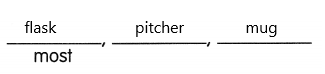
Order the pitcher, flask, and mug. Begin with the container that has the most water.
Math in Focus Grade 2 Chapter 9 Practice 2 Answer Key Getting to Know Volume 5
Answer:
Math in Focus Grade 2 Chapter 9 Practice 2 Answer Key Getting to Know Volume q13
The flask is having 9 glasses of milk.
The mug is having 2 glasses of milk.
The pitcher is having 5 glasses of milk.
It was like a descending order. We have to write from highest to least.

Fill in the blanks.

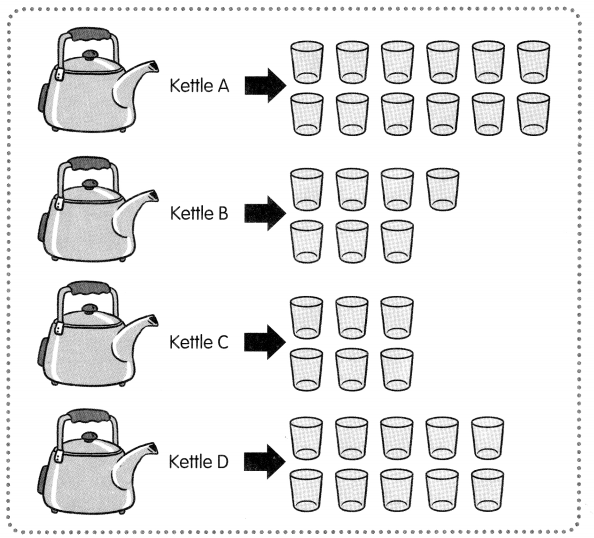
Brad fills glasses of the same size with all the water from Kettle A, Kettle B, Kettle C, and Kettle D.

Math in Focus Grade 2 Chapter 9 Practice 2 Answer Key Getting to Know Volume 6

Question 14.
Kettle ___ had the most water.
Answer: Kettle A
Explanation:
Observe the picture carefully, count all the glasses of kettle A, B, C, D.
Kettle A has 12 glasses.
Kettle B has 7 glasses.
Kettle C has 6 glasses.
Kettle D has 10 glasses.
Now compare all the glasses and write the highest number of glasses present to a kettle.
Therefore, Kettle A is having more glasses of water than others.

Question 15.
Kettle ____ had the least water.
Answer: Kettle B
Explanation:
Observe the picture carefully, count all the glasses of kettle A, B, C, D.
Kettle A has 12 glasses.
Kettle B has 7 glasses.
Kettle C has 6 glasses.
Kettle D has 10 glasses.
Now compare all the glasses and write the least number of glasses present to a kettle.
Therefore, Kettle B is having fewer glasses of water than others.

Question 16.
Kettle A had ___ more glasses of water than Kettle B
Answer: 5 glasses more.
Explanation:
Kettle A is having 12 glasses.
Kettle B is having 7 glasses.
To know the number of more glasses than kettle B, we need to subtract the number of glasses of kettle A and the number of glasses in kettle B then we get the answer.
The number of glasses more than kettle B=X
X=12-7
X=5
Therefore, kettle A had 5 more glasses of water than kettle B.

Question 17.
Kettle C had 4 fewer glasses of water than Kettle ____
Answer: kettle D
Explanation:
Kettle C is having 6 glasses.
Kettle D is having 10 glasses.
In the question asked kettle C is having 4 fewer glasses than another kettle. Assume it as X.
To get the result, add 4 to the kettle C
X=6+4
X=10
Kettle D is having 10 glasses.
Therefore, kettle C had fewer glasses of water than kettle D.

Math in Focus Grade 1 Chapter 8 Practice 2 Answer Key Ways to Add

Practice the problems of Math in Focus Grade 1 Workbook Answer Key Chapter 8 Practice 2 Ways to Add to score better marks in the exam.

Math in Focus Grade 1 Chapter 8 Practice 2 Answer Key Ways to Add

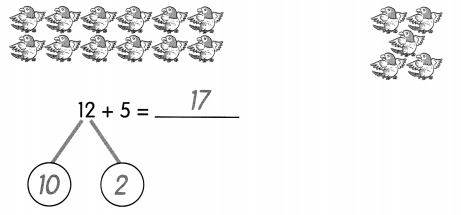
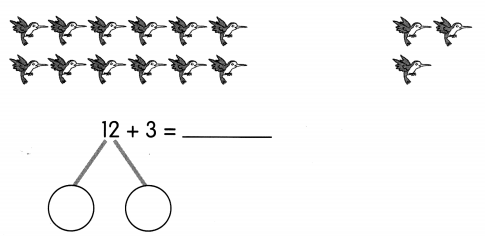
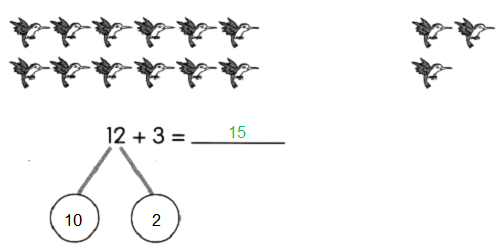
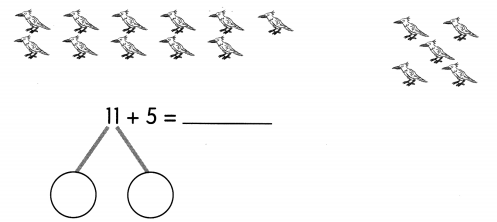
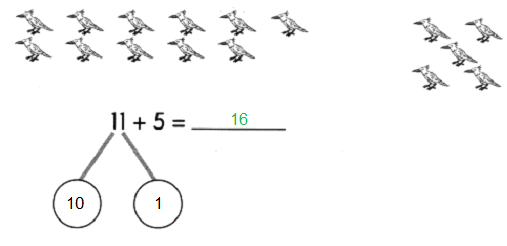
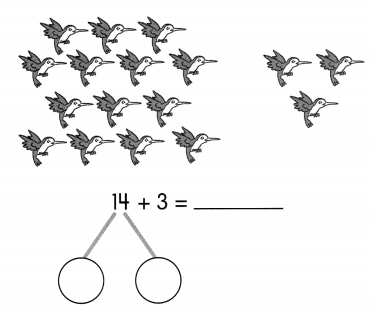
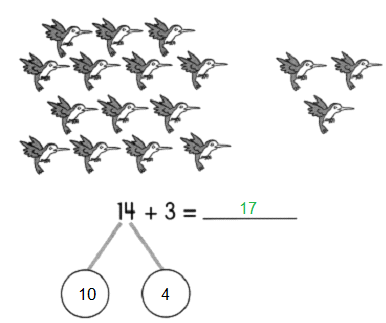
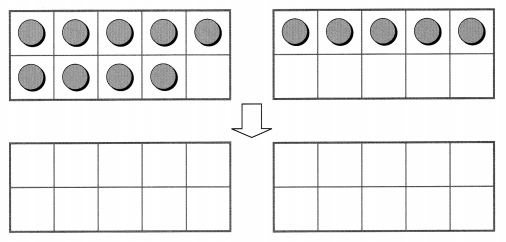
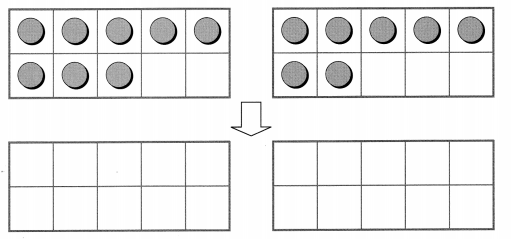
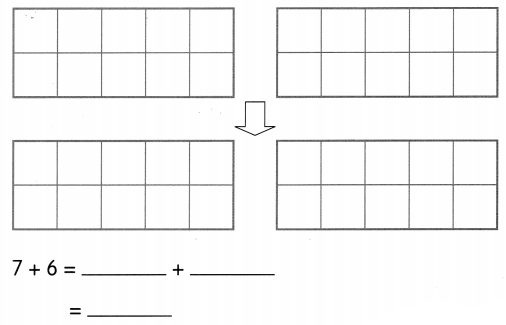
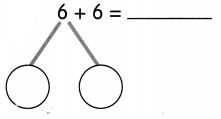
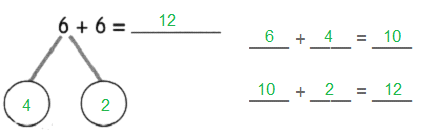
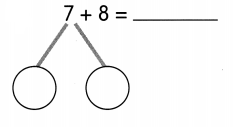
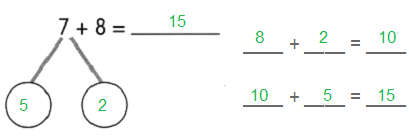
Group the numbers into a 10 and ones. Then add.

Example
Math in Focus Grade 1 Chapter 8 Practice 2 Answer Key Ways to Add 1

Question 1.
Math in Focus Grade 1 Chapter 8 Practice 2 Answer Key Ways to Add 2
Answer:
Math in Focus Grade 1 Chapter 8 Practice 2 Answer Key Ways to Add_1

Question 2.
Math in Focus Grade 1 Chapter 8 Practice 2 Answer Key Ways to Add 3
Answer:
Math in Focus Grade 1 Chapter 8 Practice 2 Answer Key Ways to Add_2

Question 3.
Math in Focus Grade 1 Chapter 8 Practice 2 Answer Key Ways to Add 4
Answer:
Math in Focus Grade 1 Chapter 8 Practice 2 Answer Key Ways to Add_3

Question 4.
Math in Focus Grade 1 Chapter 8 Practice 2 Answer Key Ways to Add 5
Answer:
Math in Focus Grade 1 Chapter 8 Practice 2 Answer Key Ways to Add_4

Add.

Question 5.
15 + 2 = ______
Answer: 17

Question 6.
12 + 4 = ______
Answer: 16

Question 7.
13 + 5 = _____
Answer: 18

Question 8.
6 + 11 = _____
Answer: 17

Question 9.
7 + 12 = ______
Answer: 19

Question 10.
7 + 11 = ______
Answer: 18

Math in Focus Grade 1 Chapter 8 Practice 1 Answer Key Ways to Add

Practice the problems of Math in Focus Grade 1 Workbook Answer Key Chapter 8 Practice 1 Ways to Add to score better marks in the exam.

Math in Focus Grade 1 Chapter 8 Practice 1 Answer Key Ways to Add

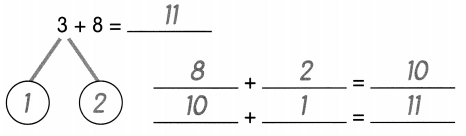
Make a 10.
Then add.

Example
Math in Focus Grade 1 Chapter 8 Practice 1 Answer Key Ways to Add 1

Question 1.
Math in Focus Grade 1 Chapter 8 Practice 1 Answer Key Ways to Add 2
Answer:
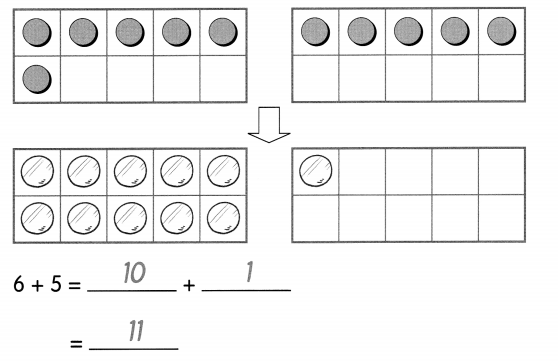
7 + 5 = 10 + 2 = 12

Question 2.
Math in Focus Grade 1 Chapter 8 Practice 1 Answer Key Ways to Add 3
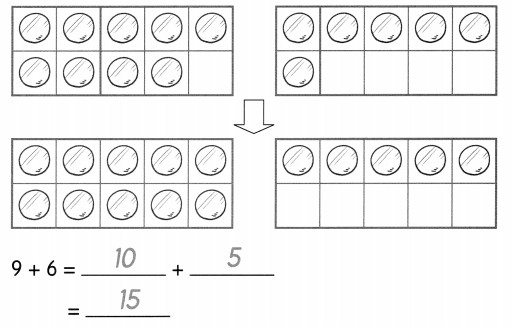
Answer:
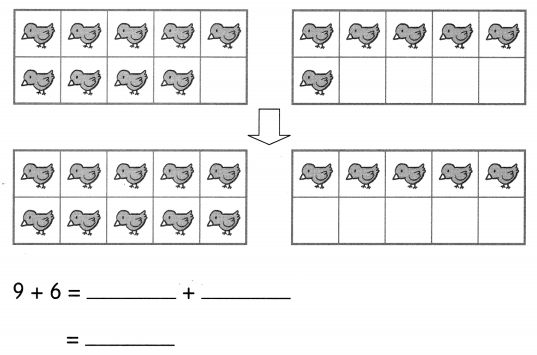
9 + 6 = 10 + 5 = 15

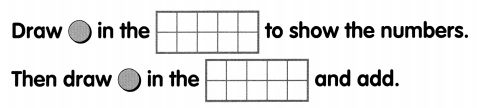
Draw Math in Focus Grade 1 Chapter 8 Practice 1 Answer Key Ways to Add 4 to make a 10. Then add.
Example

Math in Focus Grade 1 Chapter 8 Practice 1 Answer Key Ways to Add 5

Question 3.
Math in Focus Grade 1 Chapter 8 Practice 1 Answer Key Ways to Add 6
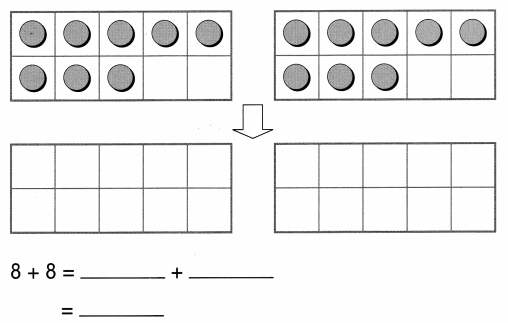
Answer: 8 + 8 = 10 + 6 = 16

Question 4.
Math in Focus Grade 1 Chapter 8 Practice 1 Answer Key Ways to Add 7
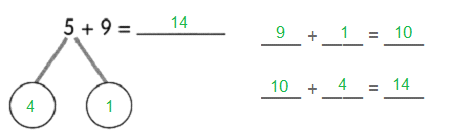
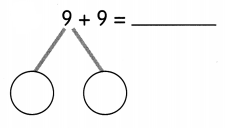
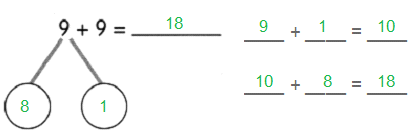
9 + 5 = ___ + ___
= _____
Answer: 9 + 5 = 10 + 4 = 14

Question 5.
Math in Focus Grade 1 Chapter 8 Practice 1 Answer Key Ways to Add 8
8 + 7 = ___
= _____
Answer: 8 + 7 = 10 + 5 = 15

Math in Focus Grade 1 Chapter 8 Practice 1 Answer Key Ways to Add 9

Example
Math in Focus Grade 1 Chapter 8 Practice 1 Answer Key Ways to Add 10

Question 6.
Math in Focus Grade 1 Chapter 8 Practice 1 Answer Key Ways to Add 11
Answer: 7 + 6 = 10 + 3 = 13

Make a 10.
Then add.
Example
Math in Focus Grade 1 Chapter 8 Practice 1 Answer Key Ways to Add 12

Question 7.
Math in Focus Grade 1 Chapter 8 Practice 1 Answer Key Ways to Add 13
____ + ____ = ____
____ + ____ = ____
Answer:
Math in Focus Grade 1 Chapter 8 Practice 1 Answer Key Ways to Add_1

Question 8.
Math in Focus Grade 1 Chapter 8 Practice 1 Answer Key Ways to Add 14
____ + ____ = ____
____ + ____ = ____
Answer:
Math in Focus Grade 1 Chapter 8 Practice 1 Answer Key Ways to Add_2

Question 9.
Math in Focus Grade 1 Chapter 8 Practice 1 Answer Key Ways to Add 15
____ + ____ = ____
____ + ____ = ____
Answer:
Math in Focus Grade 1 Chapter 8 Practice 1 Answer Key Ways to Add_3

Question 10.
Math in Focus Grade 1 Chapter 8 Practice 1 Answer Key Ways to Add 16
____ + ____ = ____
____ + ____ = ____
Answer:
Math in Focus Grade 1 Chapter 8 Practice 1 Answer Key Ways to Add_4

Math in Focus Grade 1 Chapter 9 Practice 2 Answer Key Comparing More Than Two Things

Practice the problems of Math in Focus Grade 1 Workbook Answer Key Chapter 9 Practice 2 Comparing More Than Two Things to score better marks in the exam.

Math in Focus Grade 1 Chapter 9 Practice 2 Answer Key Comparing More Than Two Things

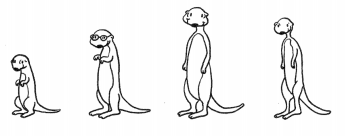
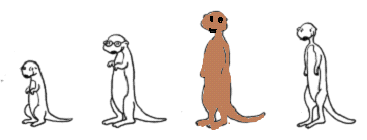
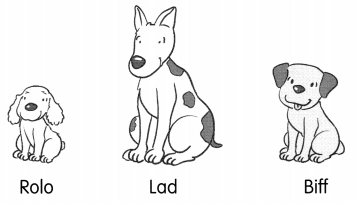
Look at the picture. Fill in the blanks with the correct names.

Math in Focus Grade 1 Chapter 9 Practice 2 Answer Key Comparing More Than Two Things 1

Question 1.
____ is taller than Biff.
Answer: Lad is taller than Biff.

Question 2.
Biff is taller than ____
Answer: Biff is taller than Rolo

Question 3.
So, Lad is also taller than ____
Answer: So, Lad is also taller than Rolo

Read.
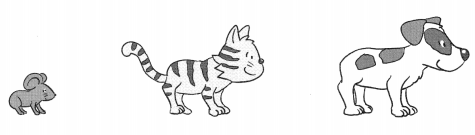
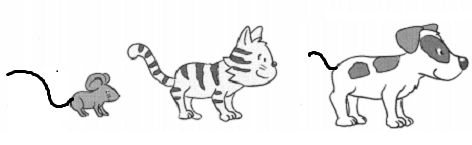
Then draw the tails on the mouse and dog.
Question 4.
The mouse’s tail is longer than the cat’s tail. The cat’s tail is longer the dog’s tail. So, the mouse’s tail is longer than the dog’s tail.
Math in Focus Grade 1 Chapter 9 Practice 2 Answer Key Comparing More Than Two Things 2
Answer:
Math in Focus Grade 1 Chapter 9 Practice 2 Answer Key Comparing More Than Two Things_1

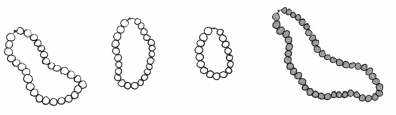
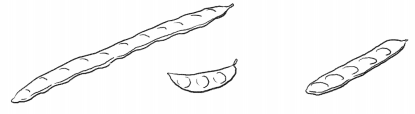
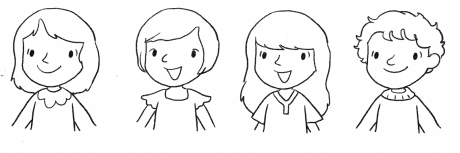
Color.
Example

the longest string of beads
Math in Focus Grade 1 Chapter 9 Practice 2 Answer Key Comparing More Than Two Things 3

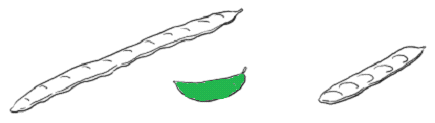
Question 5.
the shortest vegetable
Math in Focus Grade 1 Chapter 9 Practice 2 Answer Key Comparing More Than Two Things 4
Answer:
Math in Focus Grade 1 Chapter 9 Practice 2 Answer Key Comparing More Than Two Things_2

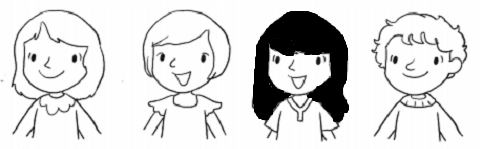
Question 6.
the girl with the longest hair
Math in Focus Grade 1 Chapter 9 Practice 2 Answer Key Comparing More Than Two Things 5
Answer:
Math in Focus Grade 1 Chapter 9 Practice 2 Answer Key Comparing More Than Two Things_3

Question 7.
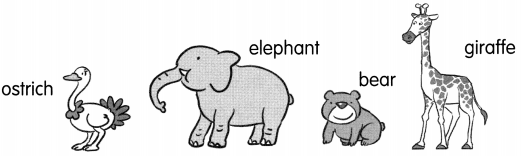
the tallest animal.
Math in Focus Grade 1 Chapter 9 Practice 2 Answer Key Comparing More Than Two Things 6
Answer:
Math in Focus Grade 1 Chapter 9 Practice 2 Answer Key Comparing More Than Two Things_4

Fill in the blanks with taller, tallest, shorter, or shortest.

Math in Focus Grade 1 Chapter 9 Practice 2 Answer Key Comparing More Than Two Things 7

Question 8.
The giraffe is the ____ animal.
Answer: The giraffe is the tallest animal.

Question 9.
The ostrich is ___ than the bear.
Answer: The ostrich is taller than the bear.

Question 10.
The ___________ animal is the bear.
Answer: The shortest animal is the bear.

Question 11.
The ostrich is ____ than the elephant.
Answer: The ostrich is shorter than the elephant.

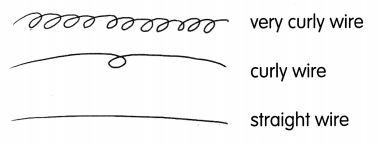
Look at the picture. Fill in the blanks.

Math in Focus Grade 1 Chapter 9 Practice 2 Answer Key Comparing More Than Two Things 8

Question 12.
The ___________________ is longer than the curly wire.
Answer: The very curly hair is longer than the curly wire.

Question 13.
The curly wire ¡s longer than the _______.
Answer: The curly wire ¡s longer than the straight hair.

Question 14.
The ___________________ is the longest wire.
Answer: The very curly hair is the longest wire.

Math in Focus Grade 1 Chapter 9 Answer Key Length

Practice the problems of Math in Focus Grade 1 Workbook Answer Key Chapter 9 Length to score better marks in the exam.

Math in Focus Grade 1 Chapter 9 Answer Key Length

Math Journal

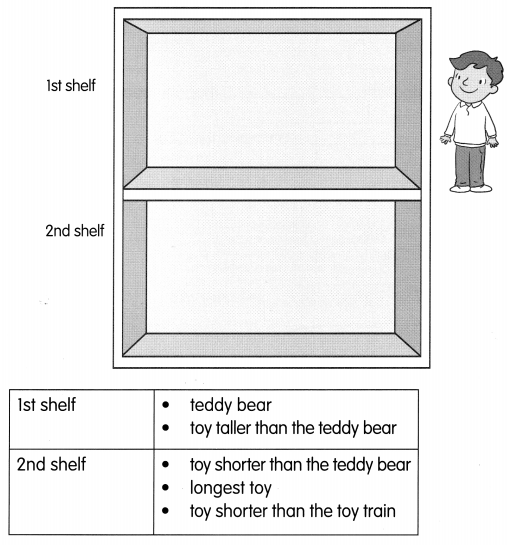
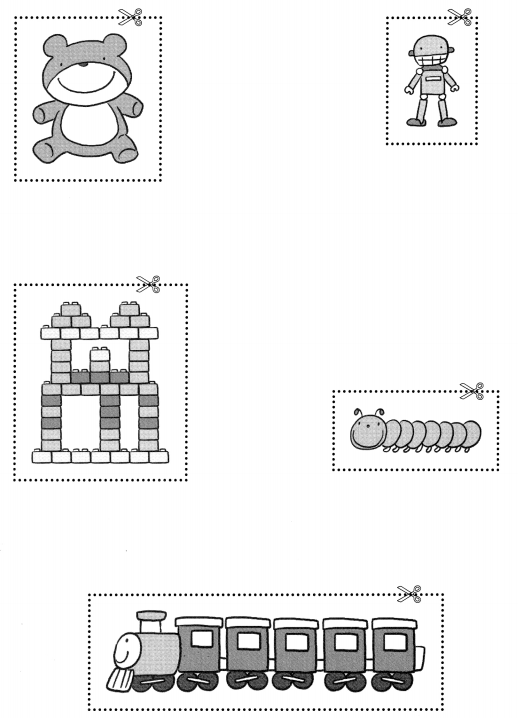
Help Jamie put his toys away. Read. Then cut out the toys on page 227 and paste them on the shelf.

Math in Focus Grade 1 Chapter 9 Answer Key Length 1

Math in Focus Grade 1 Chapter 9 Answer Key Length 2

Put on Your Thinking cap!

Challenging Practice

Solve.

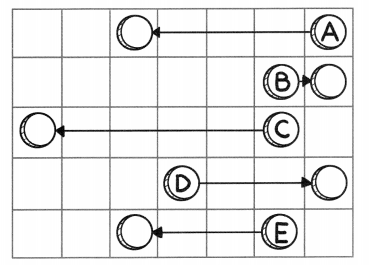
Mae moves the counters on a board. The arrows show the moves.
Math in Focus Grade 1 Chapter 9 Answer Key Length 3

Question 1.
Which counter makes the longest move?
__________
Answer: Counter C makes the longest move.

Question 2.
Which counter makes the shortest move?
__________
Answer: Counter B makes the shortest move.

Question 3.
Which counter moves 5 squares? __________
Answer: Counter C moves 5 squares.

Question 4.
Which counters move the same length? ___ and ___
Answer: D and E counters moves the same length.

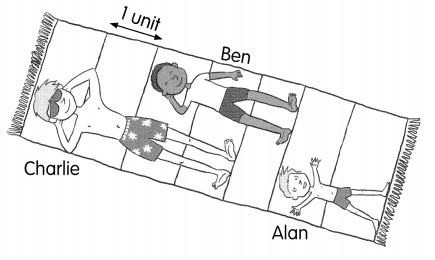
Three boys are lying on a mat.

Math in Focus Grade 1 Chapter 9 Answer Key Length 4

Question 5.
Who is the tallest? __________
Answer: Charlie is the tallest with length of 4 units.

Question 6.
Who is the shortest? __________
Answer: Alan is the shortest with length of 2 units.

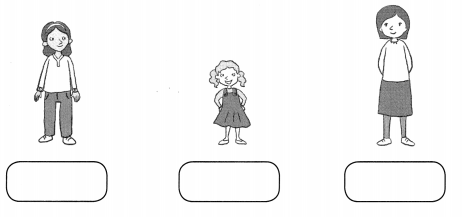
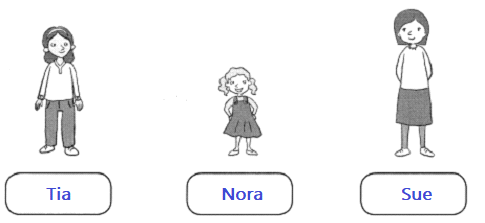
Write the names of the girls in the boxes.

Question 7.
Tia is taller than Nora. Sue is the tallest.
Math in Focus Grade 1 Chapter 9 Answer Key Length 5
Answer:
Math in Focus Grade 1 Chapter 9 Answer Key Length_7

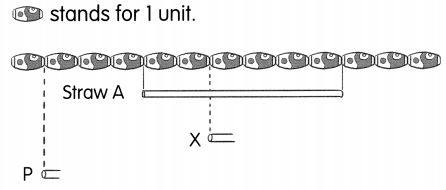
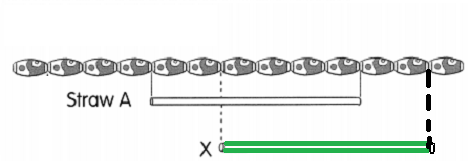
Look at the picture and read. Then draw.

Math in Focus Grade 1 Chapter 9 Answer Key Length 6

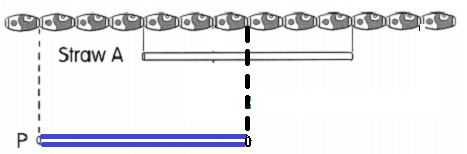
Question 8.
Draw a straw as long as Straw A. Start at P.
Answer:
Math in Focus Grade 1 Chapter 9 Answer Key Length_8

Question 9.
Draw a straw longer than Straw A. Start at X.
Answer:
Math in Focus Grade 1 Chapter 9 Answer Key Length_9

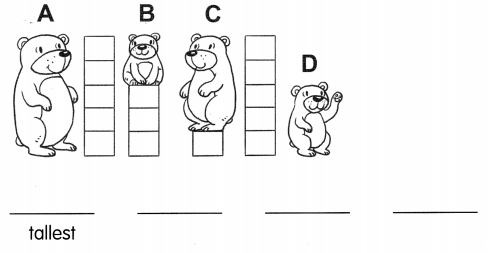
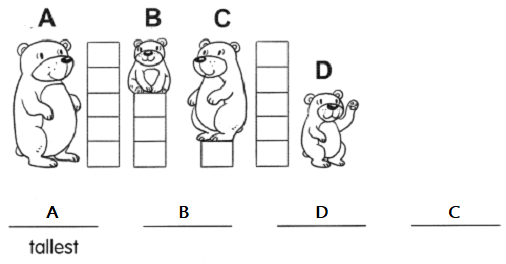
Arrange the bears in order. Write the letter.

Question 10.
Math in Focus Grade 1 Chapter 9 Answer Key Length 7
Answer:
Math in Focus Grade 1 Chapter 9 Answer Key Length_10

Put On Your Thinking Cap!

Problem Solving

Fill in the blanks.

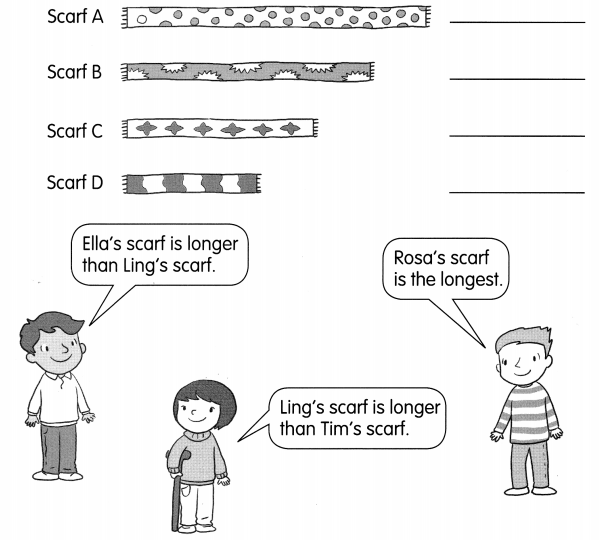
Question 1.
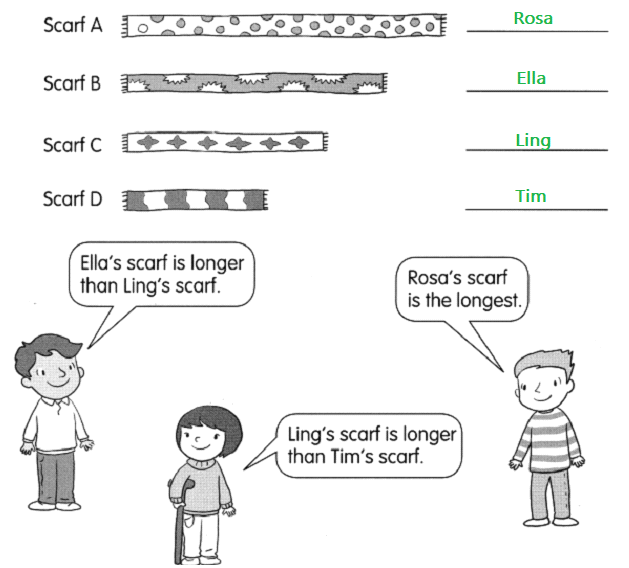
Tim, Ella, Rosa, and Ling knit some scarves. Who does each scarf belong to?
Math in Focus Grade 1 Chapter 9 Answer Key Length 8
Answer:
Math in Focus Grade 1 Chapter 9 Answer Key Length_11

Chapter Review/Test
Vocabulary
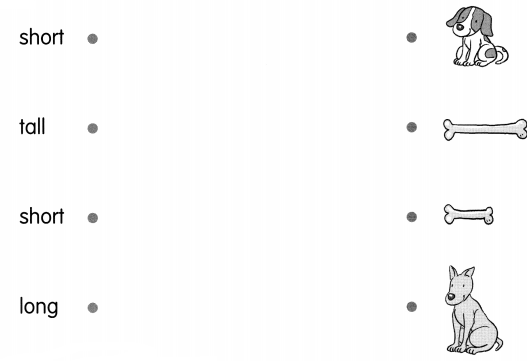
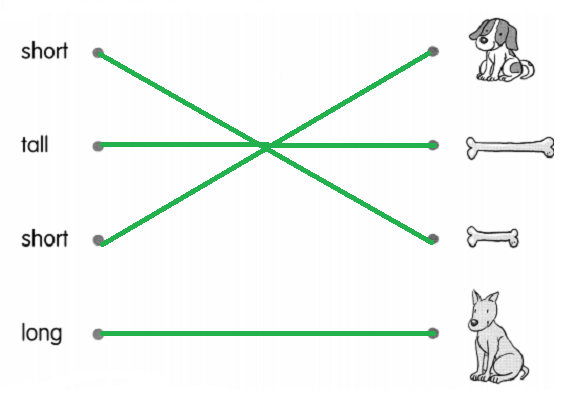
Match.

Question 1.
Math in Focus Grade 1 Chapter 9 Answer Key Length 9
Answer:
Math in Focus Grade 1 Chapter 9 Answer Key Length_13

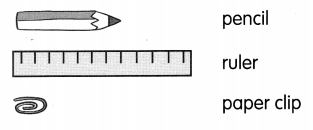
Write longest or shortest.

Question 2.
Math in Focus Grade 1 Chapter 9 Answer Key Length 10
The paper clip is the __________
The ruler is the __________
Answer:
The paper clip is the shortest
The ruler is the longest

Concepts and Skills
Draw a start line.
Read and color.

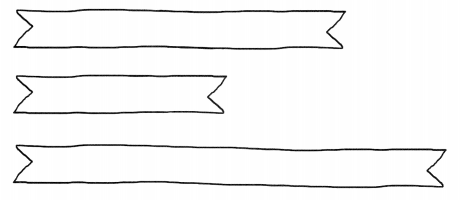
Question 3.
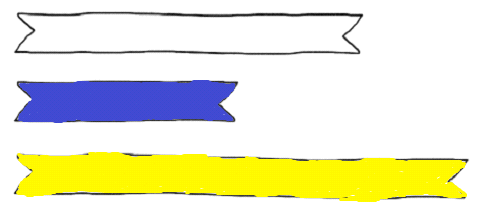
Color the longest ribbon yellow. Color the shortest ribbon blue.
Math in Focus Grade 1 Chapter 9 Answer Key Length 11
Answer:
Math in Focus Grade 1 Chapter 9 Answer Key Length_3

Fill in the blanks.

Question 4.
Math in Focus Grade 1 Chapter 9 Answer Key Length 12
Answer:
Math in Focus Grade 1 Chapter 9 Answer Key Length_4

Problem Solving

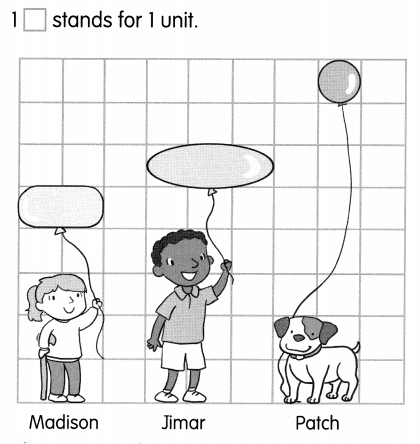
Solve.

Math in Focus Grade 1 Chapter 9 Answer Key Length 13

Question 5.
Madison is ____ units tall.
Answer: Madison is 3 units tall.

Question 6.
Patch is ___ units tall and ___ units long.
Answer: Patch is 2 units tall and 2 units long.

Question 7.
The longest balloon is ____ units long.
Answer: The longest balloon is 3 units long.

Question 8.
Whose balloon has the longest string? __________
Answer: Patch’s balloon has the longest string.

Solve.

Question 9.
Three children are on stage. Ben is taller than Ally. Charlie is shorter than Ben. Ally is the shortest. Who is the tallest? _____ is the tallest. Who is not the shortest and not the tallest?
Math in Focus Grade 1 Chapter 9 Answer Key Length 14
Answer: Ben is the tallest,
Charlie is not the shortest and not the tallest,
Among all Ally is the shortest.

Math in Focus Grade 5 Chapter 13 Practice 1 Answer Key Classifying Triangles

This handy Math in Focus Grade 5 Workbook Answer Key Chapter 13 Practice 1 Classifying Triangles provides detailed solutions for the textbook questions.

Math in Focus Grade 5 Chapter 13 Practice 1 Answer Key Classifying Triangles

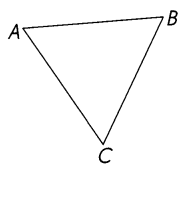
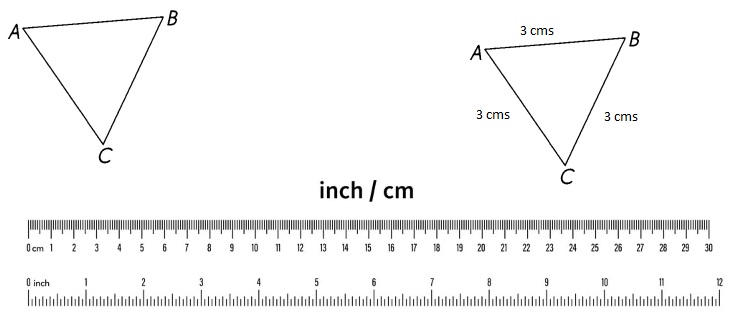
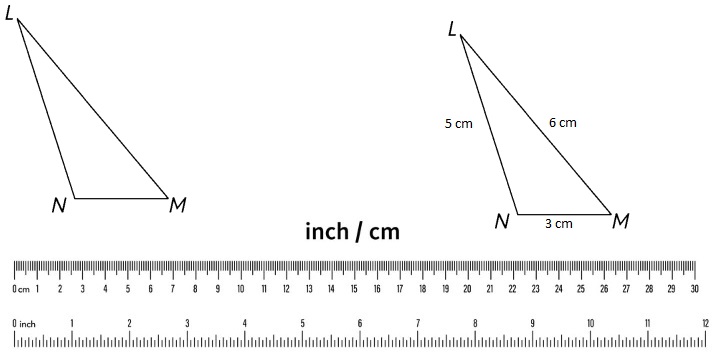
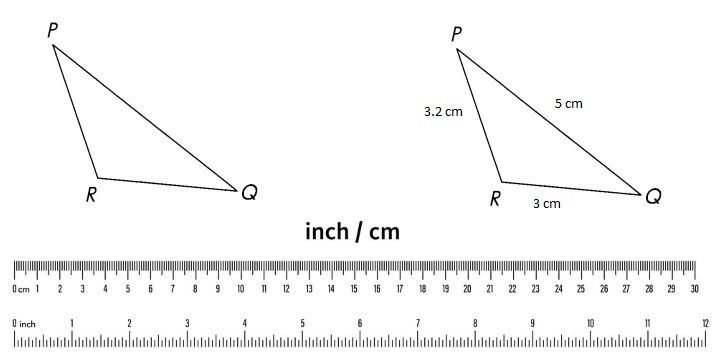
Which of these triangles are equilateral, isosceles, or scalene? Use a centimeter ruler to find out.

Question 1.
Math in Focus Grade 5 Chapter 13 Practice 1 Answer Key Building Solids Using Unit Cubes 1
Triangle ABC is a/an triangle.
__Equilateral_ triangle.
Answer:
Math in Focus Grade 5 Chapter 13 Practice 1 Answer Key Building Solids Using Unit Cubes-1
Triangle ABC is an equilateral triangle,

Explanation:
Given triangle ABC is an equilateral triangle because all
given 3 sides are equal.

Question 2.
Math in Focus Grade 5 Chapter 13 Practice 1 Answer Key Building Solids Using Unit Cubes 2
Triangle DEF is a/an
_____ triangle.
Answer:
Math in Focus Grade 5 Chapter 13 Practice 1 Answer Key Building Solids Using Unit Cubes-2
Triangle DEF is an isosceles triangle,

Explanation:
Given triangle DEF is an isosceles triangle because
only 2 sides are equal and congurent.

Question 3.
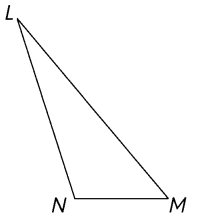
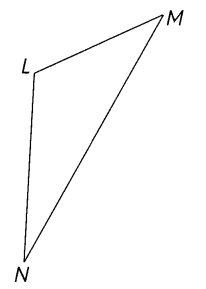
Math in Focus Grade 5 Chapter 13 Practice 1 Answer Key Building Solids Using Unit Cubes 3
Triangle LMN is a/an
_____ triangle.
Answer:
Math in Focus Grade 5 Chapter 13 Practice 1 Answer Key Building Solids Using Unit Cubes-3
Triangle LMN is an  scalene triangle,

Explanation:
Given triangle LMN is an scalene triangle because all
given 3 sides are not equal as LM ≠ MN ≠ LN.

Question 4.
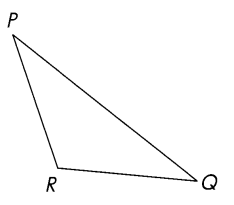
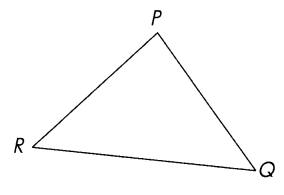
Math in Focus Grade 5 Chapter 13 Practice 1 Answer Key Building Solids Using Unit Cubes 4
Triangle PQR is a/an
___ triangle.
Answer:
Math in Focus Grade 5 Chapter 13 Practice 1 Answer Key Building Solids Using Unit Cubes-4
Triangle PQR is a scalene triangle,

Explanation:
Given triangle PQR is a scalene triangle because all
given 3 sides are not equal as PQ ≠ PR ≠ RQ.

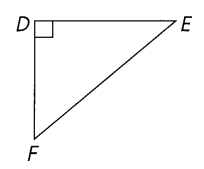
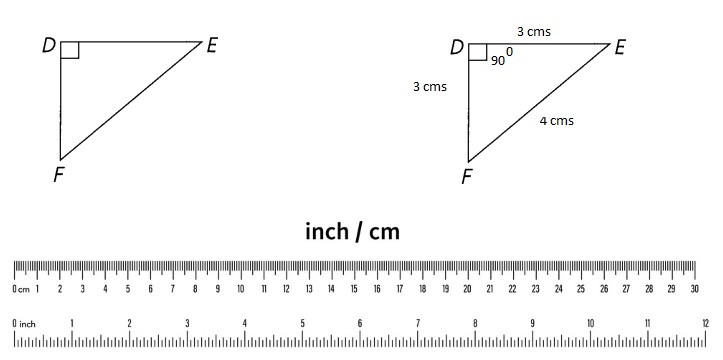
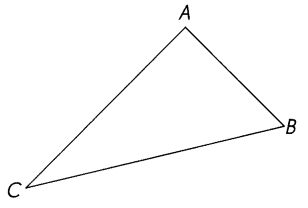
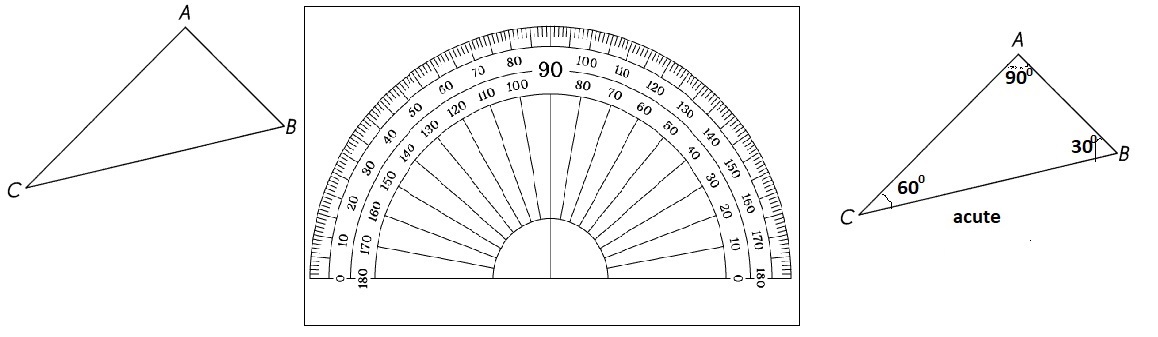
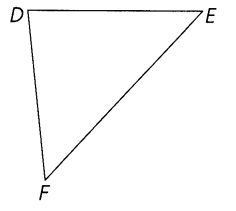
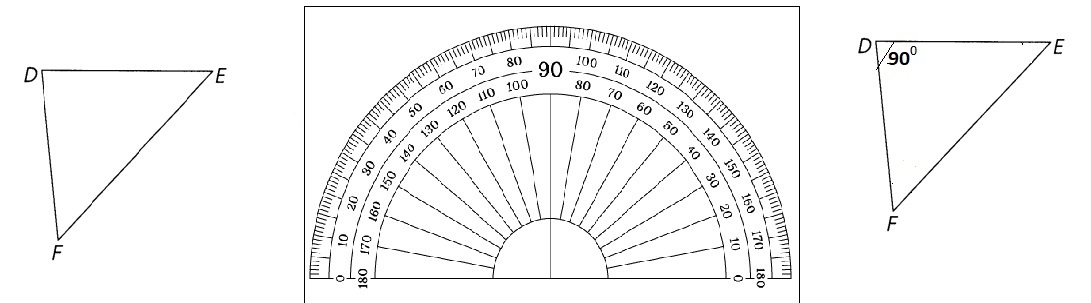
Which of these triangles are right, obtuse, or acute? Use a protractor to find out.

Question 5.
Math in Focus Grade 5 Chapter 13 Practice 1 Answer Key Building Solids Using Unit Cubes 5
Triangle ABC is a/an
____ triangle.
Answer:
Math in Focus Grade 5 Chapter 13 Practice 1 Answer Key Building Solids Using Unit Cubes-5

Explanation:
Given triangle ABC is acute triangle, because angle B and C is measuring less than 900.

Question 6.
Math in Focus Grade 5 Chapter 13 Practice 1 Answer Key Building Solids Using Unit Cubes 6
Triangle DEF is a/an
____ triangle.
Answer:
Math in Focus Grade 5 Chapter 13 Practice 1 Answer Key Building Solids Using Unit Cubes-6
Explanation:
Given triangle DEF is right triangle, because angle D is measuring 900.

Question 7.
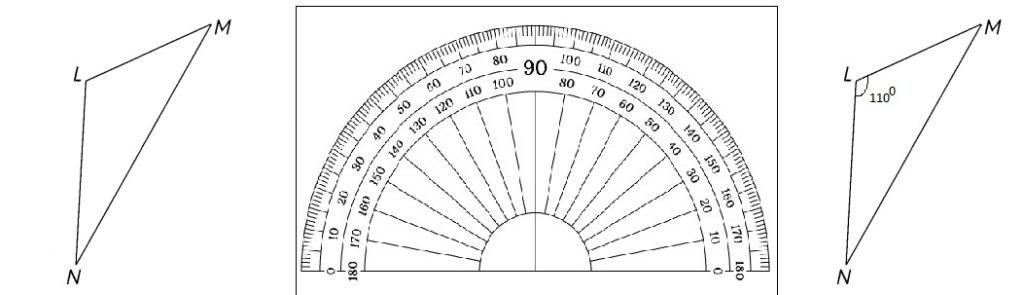
Math in Focus Grade 5 Chapter 13 Practice 1 Answer Key Building Solids Using Unit Cubes 7
Triangle LMN is a/an
____ triangle.
Answer:
Math in Focus Grade 5 Chapter 13 Practice 1 Answer Key Building Solids Using Unit Cubes-7

Explanation:
Given triangle LMN is obtuse triangle, because angle L is measuring more than 900 as 1100.

Question 8.
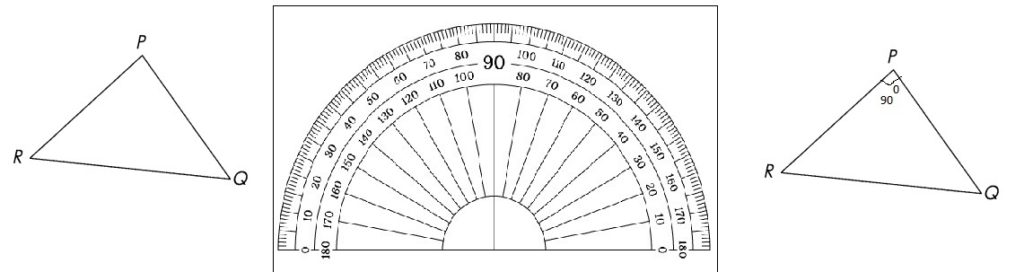
Math in Focus Grade 5 Chapter 13 Practice 1 Answer Key Building Solids Using Unit Cubes 8
Triangle PQR is a/an
____ triangle.
Answer:
Math in Focus Grade 5 Chapter 13 Practice 1 Answer Key Building Solids Using Unit Cubes-8
Explanation:
Given triangle PRQ is right triangle, because angle P is measuring 900.

Math in Focus Grade 5 Chapter 5 Practice 1 Answer Key Number Patterns and Relationships

Go through the Math in Focus Grade 5 Workbook Answer Key Chapter 5 Practice 1 Number Patterns and Relationships to finish your assignments.

Math in Focus Grade 5 Chapter 4 Practice 1 Answer Key Number Patterns and Relationships

Write the next three terms of each number pattern. Then describe the rule for each pattern.

Question 1.
3, 6, 9, 12, __, ___, ____
Rule: ____
Answer:
3, 6, 9, 12, 15, 18, 21
Rule: Multiples of 3.
Explanation:
The next three terms of a given number pattern 3, 6, 9, 12 is 15, 18, 21.

Question 2.
4,000,000, 400,000, 40,000, 4,000, ___, ___,
____,
Rule: ____
Answer:
4,000,000, 400,000, 40,000, 4,000, 4,00, 40, 4.

Question 3.
3, 6, 12, 24, __, ___, ____
Rule: _____
Answer:
3, 6, 12, 24, 48, 96, 192

Question 4.
50, 49, 47, 44, 40, __, ___, ____
Rule: _________
Answer:15
50, 49, 47, 44, 40, 35, 29, 22

Complete the tables.

Question 5.
a. Math in Focus Grade 5 Chapter 5 Practice 1 Answer Key Number Patterns and Relationships 1
Answer:
Math-in-Focus-Grade-5-Chapter-5-Practice-1-Answer-Key-Number-Patterns-and-Relationships-1

b. Math in Focus Grade 5 Chapter 5 Practice 1 Answer Key Number Patterns and Relationships 2
Answer:
Math-in-Focus-Grade-5-Chapter-5-Practice-1-Answer-Key-Number-Patterns-and-Relationships-2

Complete the table and answer the questions.

Question 6.
The table shows the relationship between temperatures measured in degrees Celsius (°C) and degrees Fahrenheit (°F).
Math in Focus Grade 5 Chapter 5 Practice 1 Answer Key Number Patterns and Relationships 3

Math-in-Focus-Grade-5-Chapter-5-Practice-1-Answer-Key-Number-Patterns-and-Relationships-3

a. If the temperature is 100°F outside, is this temperature greater than or less than 40°C? Explain.
Answer:

b. Recently meteorologists added a new color to their weather maps for temperatures of 1 22°F or greater. What temperature is this in degrees Celcius?
Answer:

Complete the tables and answer the questions.

Question 7.
A set of 20 plastic cups costs $2.50.
Math in Focus Grade 5 Chapter 5 Practice 1 Answer Key Number Patterns and Relationships 4

Math-in-Focus-Grade-5-Chapter-5-Practice-1-Answer-Key-Number-Patterns-and-Relationships-4

a. What is the cost of 60 cups?
Answer:
$2.50 + $2.50 + $2.50 = $7.50
Explanation:
The cost of 60 cups is $7.50.

b. What is the cost of 8 sets of cups?
Answer:
20 cups x 8 = 160 cups
$2.50 x 8 = $20
The cost of 160 cups is $20.
Explanation:
A set of 20 plastic cups costs $2.50. Multiply $2.50 with 8 the product is $20. The cost of 8 sets of cups is $20.

c. How many cups can you get for $17.50?
Answer:
20 cups x 7 = 140 cups
$2.50 x 7 = $17.50.
Explanation:
A set of 20 plastic cups costs $2.50. Multiply $2.50 with 7 the product is $17.50. We can get 140 cups for $17.50.

Question 8.
A van travels at a speed of 60 kilometers per hour.
Math in Focus Grade 5 Chapter 5 Practice 1 Answer Key Number Patterns and Relationships 5

Math-in-Focus-Grade-5-Chapter-5-Practice-1-Answer-Key-Number-Patterns-and-Relationships-5

a. How far does the van travel in 6 hours?
Answer:
1 hour = 60 km
6 hours = ?
60 x 6 = 360km
Explanation:
A van travels at a speed of 60 kilometers per hour. Multiply 6 hours with 60 kilometers the product is 260 kilometers. The van travels 360 kilometers in 6 hours.

b. How long does the van take to travel 180 kilometers?
Answer:
1 hour = 60 km
? = 180 km
180km x 1 hour = ? 60 km
180/ 60 = 3hours
Explanation:
A van travels at a speed of 60 kilometers per hour. Divide 180 by 60 the result is 3. The van takes 3 hours to travel 180 kilometers.

c. How long does the van take to travel 180 kilometers?
Answer:

Complete the table and answer the questions.

Question 9.
Alex borrowed $155 from his parents to buy an electronic notepad. He repays some of the loan each week. The table shows how much he still owes after he repays the same amount each week.
Math in Focus Grade 5 Chapter 5 Practice 1 Answer Key Number Patterns and Relationships 6

Math-in-Focus-Grade-5-Chapter-5-Practice-1-Answer-Key-Number-Patterns-and-Relationships-6

a. How much of his loan is Alex repaying each week?
Answer:
Alex repaying each week $10 of his loan.

b. How much will he have left to repay at week 10?
Answer:
At week 10 Alex left to repay $55.

c. Will it take Alex 15 weeks to repay the loan? Explain.
Answer:
Alex takes 16 weeks to repay the loan. Every week he repaying $10. At 15 week Alex left to repay $5.

Math in Focus Grade 5 Chapter 9 Practice 6 Answer Key Real-World Problems: Decimals

Practice the problems of Math in Focus Grade 5 Workbook Answer Key Chapter 9 Practice 6 Real-World Problems: Decimals to score better marks in the exam.

Math in Focus Grade 5 Chapter 9 Practice 6 Answer Key Real-World Problems: Decimals

Solve. Show your work.

Question 1.
How many liters of spring water are in 6 bottles if each bottle contains 0.33 liter of spring water? Round your answer to the nearest liter.
Answer:
2liters
Explanation:
Total bottles = 6
Each bottle contains 0.33 liter of water.
Number of liters of spring water in 6 bottles
0.33 × 6
0.33 rounds to 30.
30 x 6 = 12
12 divided by 6 = 2

Question 2.
A plumber has a copper pipe 0.9 meter long. He cuts the pipe into 4 equal pieces. Find the length of each piece in meters. Round your answer to the nearest tenth of a meter.
Answer: 2m
Explanation:
A plumber has a copper pipe 0.9 meter long.
He cuts the pipe into 4 equal pieces.
Length of each piece
0.9 ÷ 4
0.9 is about 8.
8 ÷ 4 = 2
0.9 ÷ 4 is about 2.

Question 3.
Ashton is thinking of a number. When she divides it by 7, she gets a quotient of 7.35. What number is Ashton thinking of?
Answer: 51.45
Explanation:
First multiply the quotient with the dividend i.e.,
7.35 x 7 = 51.45
Then divide the product with 7
51.45 ÷ 7 = 7.35
So, the estimate of number is 51

Solve. Show your work.

Question 4.
Mr. Kasac drives 32.27 miles from his office to his home. After driving 15.65 miles, he stopped at the dry cleaner’s. How much farther does he have to drive before he gets home? Give your answer to the nearest mile.
Answer: 16 miles
Explanation:
Mr. Kasac drives 32.27 miles from his office to his home.
After driving 15.65 miles, he stopped at the dry cleaner’s.
Still how much he have to drive before he gets home.
32.27 – 15.65
32.27 rounds to 32.
15.65 rounds to 16.
32 – 16 = 16
32.27 – 15.65 is about 16.

Question 5.
4 gallons of low fat milk cost $13.80. Find the cost of 6 gallons of low fat milk.
Answer: $21
Explanation:
4 gallons of low fat milk cost $13.80.
1 gallon of milk = 13.80 ÷ 4
13.80 is rounded as 14
14 ÷ 4 = 3.5
The cost of 6 gallons of low fat milk. = 6 x 3.5 = 21

Question 6.
3 cans of green beans cost $1.80. Rizal bought 9 cans of green beans. How much did he pay?
Answer: $5.4
Estimate: 5
3 cans of green beans cost $1.80.
1 can of green beans = 1.80 ÷ 3
1.80 is rounded as 180
Cost 9 cans of green beans
9 x 0.6 = 5.4
Solve. Show your work.

Question 7.
During the summer, Andrew worked for 6 days each week. He worked 8 hours each day. In a week, he earned $360. How much was he paid for each hour of work?
Answer: $7.5
Estimate: $8
Explanation:
Andrew worked for 6 days each week.
He worked 8 hours each day.
In a week he worked for 6 x 8 = 48
In a week, he earned $360.
Each hour he was paid 360 ÷ 48 = 7.5

Question 8.
A bag contains 10 pounds of dog food. A family feeds their dogs 0.85 pound of dog food a day. How much dog food is left in the bag after 7 days? Give your answer to the nearest pound.
Answer: 4 pounds.
Explanation:
A bag contains 10 pounds of dog food.
A family feeds their dogs 0.85 pound of dog food a day.
Dog consumes food for 7 days = 0.85 x 7 = 5.95
Dog food left in the bag after 7 days = 10 – 5.95 = 4.05

Solve. Show your work.

Question 9.
A box of rice cakes costs $1.95. What is the greatest number of boxes of rice cakes Jared can buy with $10?
Answer: 20 boxes.
Explanation:
A box of rice cakes costs $1.95.
The greatest number of boxes of rice cakes Jared can buy with $10 = 1.95 x 10
1.95 is rounded to 2
So, 2 x 10 = 20

Question 10.
A metal rod 9.4 meters long is cut into two pieces. One piece is 3 times as long as the other. Find the length of the longer piece in meters. Round your answer to the nearest tenth of a meter.
Answer: 7 meters
Explanation:
A metal rod 9.4 meters long is cut into two pieces.
Let the length of shorter piece = x meters
Longer piece is 3 times as long as the shorter.
Longer piece = 3 x shorter piece
Longer piece = 3x
Length of rod = longer piece + shorter piece
9.4 = 3x + x
9.4 = 4x
x = 9.4 ÷ 4
x = 2.35
Length of longer piece = 3x = 3 x 2.35 = 7.05

Solve. Show your work.

Question 11.
Rani bought 9 similar notebooks. She gave the cashier $10 and received change of $5.05. What was the cost of 1 notebook?
Answer: $0.55
Estimate: $1
Explanation:
Rani bought 9 similar notebooks.
She gave the cashier $10 and received change of $5.05.
Change she received = 10 – 5.05 = 4.95
Cost of each notebook = 4.95 ÷ 9 = 0.55

Question 12.
A kilogram of whole-wheat flour costs $6. What is the cost of 400 grams of the flour?
Answer: $2.4
Estimate: $2
Explanation:
A kilogram of whole-wheat flour costs $6.
1 kilogram = 1000 grams
The cost of 400 grams of the flour = 400 x 6/1000 ==
= 2400/1000 = 2.4

Solve. Show your work.

Question 13.
A shop owner bought 30 folders and some journals. He paid $82.50 for the folders. Each journal cost 10 times as much as a folder. What was the cost of each journal?
Math in Focus Grade 5 Chapter 9 Practice 6 Answer Key Real-World Problems Decimals 1
Answer: $30
Explanation:
A shop owner bought 30 folders and some journals.
He paid $82.50 for the folders.
Each folder = 82.50 ÷ 30
82.50 is rounded as 90
So, 90 ÷ 30 = $3
Each journal cost 10 times as much as a folder.
So,  journal cost 3 x 10 = $30

Question 14.
There are 1,000 workers in a factory. Each worker works 30 hours a week and is paid $10.50 an hour. How much does the company pay the workers altogether each week?
Answer:
Explanation:
There are 1,000 workers in a factory.
Each worker works 30 hours a week and is paid $10.50 an hour.
So, each worker gets 10.50 x 30 = $315 per week.
Total amount does the company pay the workers altogether each week 1000 x 315 = $315,000.